Who packed the box, which service you booked and when you sign off all decide who carries the loss, from the packing booking to the final walk-through.
When a dish cracks inside a box the owner taped shut, the loss stays with the owner, because Move Your Stuff's damage coverage reaches only items its own crew packed and is voided for anything the client packed. That rule decides who pays for a broken plate long before the truck is unloaded, and it applies whether the box sat in the kitchen or the basement.
Moving a fragile box from the owner's risk to the company's risk adds no line to the bill, since packing is included at no additional charge with a booked move, with materials supplied and no home size cap that triggers an extra fee. A self-packed china cabinet is therefore a choice to carry that risk personally, made for no saving at all.
Households that prefer to box most of their own belongings can still protect the breakables, because partial packing is available within the free scope for any combination of rooms or item categories. The crew can wrap a kitchen of glassware or a china cabinet while the owner handles books and linens. One truck then carries two kinds of boxes, with the crew-packed breakables under the packing coverage and the owner's books and linens travelling at the owner's risk.
A plate wrapped by the moving crew keeps damage coverage in transit, and the same plate wrapped by its owner does not.
Insurance differs for pianos, offices and single items
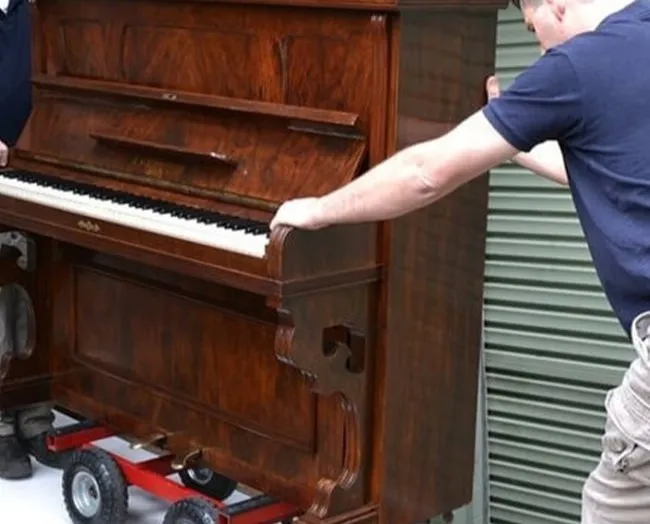
A jarred piano and a scuffed dresser are different kinds of loss, and the piano side of the business carries its own policy. Every piano moving job is covered under instrument-specific insurance, and the company states it has moved pianos across the GTA for over 15 years. The customer or a designated representative must be present at both the origin and the destination, which places a witness beside the instrument at pickup and again at delivery.
For moves of one large piece, the company's single-item page states that comprehensive insurance covers furniture and belongings and that Move Your Stuff will pay for anything damaged during the move. Time estimates for those jobs are given during an on-site inspection. Ask how a claim is assessed and settled when booking, so the process is agreed before anything is lifted.
Office relocations put monitors, computers and desk hardware on the truck, which is why the materials change. For office moving, the company supplies commercial-grade boxes, anti-static packaging and monitor wrapping, carries commercial coverage and provides a certificate of insurance for commercial buildings. Full or partial packing can be added to the office scope. Commercial packing is scoped separately from residential, so confirm how coverage applies to crew-packed office equipment when booking.
Insurance paperwork for the building
A scraped elevator cab or gouged hallway wall puts the building itself into the damage question, and management often wants insurance paperwork in hand before move day. Move Your Stuff provides certificates of insurance to building management on request, typically within 24 to 48 hours. For apartment moving, the hourly rate covers the crew and truck from arrival to completion, including elevator time and protection setup, so padding the route is part of the paid crew time.
Inspect everything before you pay
Payment for packing and for assembly work is collected only after the job is complete and the client confirms the work is correct, and that sign-off is the moment to check. Open a few crew-packed boxes of fragile items, run the drawers on a reassembled dresser and raise any problem while the crew is still on site.
Apartment moves follow the same order, with payment due upon completion, although a deposit may be required at booking for larger moves. Accepted methods for apartment moves are credit card, debit, e-transfer and cash. Walking each room with the crew lead before paying puts the condition of walls, floors and furniture on record while the people who handled them are still present.
Some risks are closed off at assembly, before anything has a chance to tip. Wall anchoring is included in the assembly service and no tools or materials are needed from the customer, so a tall wardrobe can be secured to the wall before the crew leaves and before you confirm the job is complete.
Changes that show up after the move
Treating a piano that sounds slightly off the week after delivery as move damage skips the step the company's piano page recommends, which is waiting two to four weeks after the move before booking a tuner. A tuning change and a physical mark call for different responses, so note any scuffs, chips or loose casters at delivery, when the customer or a representative is required to be present.
Coverage depends on what was booked, and the calendar decides what can still be booked. Packing services must be booked at the time the move date is confirmed, since a request made on moving day comes too late. For the peak months of May through September, book packing at least two to three weeks in advance, while outside peak season one week is typically sufficient. Same-day or next-day packing depends on crew availability, and apartment moves are best booked at least two weeks ahead.
Before sending the form on the quote page, list every fragile, high-value or electronic item in its extra details field and select packing for those rooms, or call Move Your Stuff at 647-982-1819 between 9am and 9pm, seven days a week. An item left off the booking and packed by its owner on the morning of the move travels without packing coverage, however carefully it was wrapped.
What to arrange before movers take an upright piano up or down stairs, including booking lead time, curbside permit rules by city, insurance certificates and packing coverage.