How York Region treats renovation debris
Renovation debris is the first problem homeowners in Vaughan, Markham, Richmond Hill, Thornhill and Newmarket face after a kitchen or basement project, because many municipal waste systems handle heavy tear-out material separately from household garbage. A Natural Resources Canada survey of municipal waste policy listed the Region of York as a basically residential operation where construction, renovation and demolition (CRD) waste was not banned. That finding gives homeowners a documented starting point, though it records the survey's snapshot and is not current bylaw.
The same survey describes CRD material as plaster, wood, drywall, concrete, asphalt or other waste resulting from building alterations, construction, renovation or demolition. Those are exactly the materials a kitchen gut or a basement refinish produces in volume. They are usually heavy and often end up mixed together in a single pile in the garage or driveway.
Other Ontario municipalities in the same survey took a stricter line, with one refusing CRD waste at its transfer station while still accepting small amounts from homeowners doing small do-it-yourself projects. Because acceptance of renovation debris varies from one municipality to the next, a crew confirms the material type before anything goes on the truck, and the wider gap for most households lies in what the regular collection truck leaves behind at the curb.
Bulky items that regular collection leaves behind
A homeowner can put out every bag on collection day and still be left with an old sofa, a dresser and leftover drywall. Many municipalities handle those items under separate bulky-item or renovation-waste rules. Curbside pickup in York Region is run by the local cities and towns, so those rules shift from one municipality to the next.
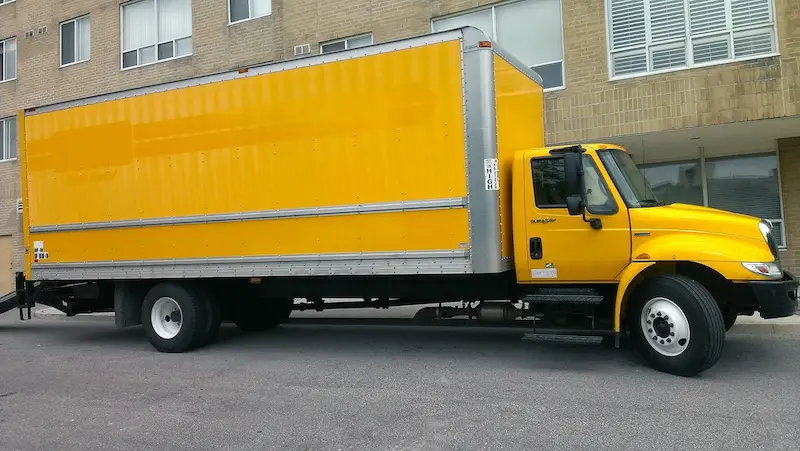
Curbside service breaks down fastest with building material, because one municipal entry in the NRCan survey states that plaster, wood, drywall, concrete and asphalt from renovation work are not collected with regular garbage and must be brought to an area landfill. That trip to a disposal site, along with the carrying and loading it requires, is the core of what a junk removal crew does for both bulky furniture and renovation debris.
Before leaving a worn sofa or a pile of drywall at the curb, check York Region's or your local municipality's bulky-item and renovation-waste rules at york.ca. Hauling for these items is covered on the Vaughan junk removal page and the Markham junk removal page, and once a load leaves the driveway it still needs a destination set up to receive it.
Finding where renovation debris is accepted
The Ontario government publishes a landfill sites map that shows where landfill sites are located across the province, with the full dataset available in the Open Data Catalogue. For a homeowner finishing a renovation, the map is the plainest public view of the disposal infrastructure that a load of drywall, wood or concrete eventually travels to, whether a crew hauls it or the homeowner drives it there.
Driving the debris yourself is a common plan after a small renovation, so start with York Region's What Waste Goes Where tool and waste depot finder at york.ca to see where renovation debris is accepted. The number of trips a mixed pile requires and the distance from the house to the site are what turn a self-haul into a full day of loading, driving and unloading a personal vehicle.
Sorting a load before it reaches any site makes each trip more useful. Keeping drywall, wood and concrete apart from household furniture lets each material go where it belongs and keeps a usable chair from being buried under broken plaster. That separation matters because a landfill is only one of several possible destinations for what comes out of a house.
Reuse and recycling before the landfill
A Library of Parliament background paper describes the usually accepted waste management hierarchy as reduce, re-use, recycle, incinerate, landfill, which places landfill last. In a household clear-out, that order puts the dining set and bookcase that still work well above the broken drywall pulled from the same room.
The same paper adds that this hierarchy does not necessarily hold for all Canadian municipalities. The practical result is that what gets reused or recycled depends on the municipality where the job takes place, so an item's final destination is decided case by case and cannot be read from one provincial rulebook.
Furniture often lands on the truck by default even though it is the easiest category to keep out of a landfill, so setting usable pieces aside before the crew arrives keeps them higher in the hierarchy and makes clear what is actually being hauled. Pieces too large to leave a room intact can be taken apart through furniture assembly and disassembly, which also makes a sound bed frame or desk easier to donate or move to another home.
Preparing a load and booking a crew
Split the load into three groups before the crew arrives, starting with renovation debris such as drywall, plaster, wood and concrete, then furniture, then general household items. Sorting by material type helps the crew confirm what can be taken, and separate piles spare everyone the job of picking through a mixed heap on the driveway while the truck waits.
Two loads of similar size can be priced very differently, because cost depends on the volume of material, how heavy and mixed the debris is, how easy the items are to reach and the trip to the disposal site, so a quote request is the way to get a figure for a specific load. Local hauling is covered on the Richmond Hill, Thornhill and Newmarket junk removal pages, and jobs in North York run through the North York junk removal page, where the crew confirms acceptance by material type in the same way.
Before calling Move Your Stuff at 647-982-1819, photograph each sorted pile, list the drywall, wood or concrete separately from the furniture, and attach those photos to your quote request. Mixed renovation debris is the material the NRCan survey shows municipalities handling differently from regular garbage, so a clear photo of each pile gives the crew what it needs to confirm acceptance before the truck is ever booked.