Households and offices in Vaughan, Richmond Hill, Markham, North York, Thornhill and Newmarket moving flat-pack wardrobes, beds, desks and shelving are putting that furniture through loads it was never designed to carry. According to the Canadian Conservation Institute (CCI), an object subjected to a shock of 100 g sustains a force equal to 100 times its weight for a brief moment, and in a move that force lands on joints built to hold a piece standing still in a room.
The CCI names five force-related effects, impact, shock, vibration, pressure and abrasion, and each one turns up somewhere between the hallway and the truck bed. Impact happens when a panel corner strikes a door frame. Shock, the institute notes, is usually the result of a strong impact, which explains why a single drop at the curb can matter more than the drive itself. Vibration comes from the road under the truck, pressure builds when a heavy item rides on a flat-packed panel, and abrasion sets in when panels rub together.
The CCI also points out that force can damage objects indirectly by causing collisions between objects or between parts of one object. In flat-pack furniture, loose shelves, doors and drawers left inside an assembled frame stop acting as part of the piece and become separate parts that strike the frame and each other every time the truck brakes or turns.
Impact, when a panel corner strikes a door frame on the way out
Shock, from a carton dropped off a dolly
Vibration, carried through the truck floor for the length of the drive
Pressure, when a heavy item sits on top of a thin flat-packed panel through every stop on the route
Abrasion, as bare panels rub together
Small chips make later breaks more likely
A chipped edge or a hairline crack beside a fastener hole looks cosmetic, yet the CCI states that localized impact damage, such as small cracks, can increase an object's susceptibility to force. A bookcase that clips a stair railing on the way out of the old home therefore leaves weaker than it was, and every bump in the elevator, the truck and the new driveway works on that damaged spot.
The CCI explains that impact force can be concentrated in a small area or spread out, depending on the hardness and geometry of the surfaces that collide, so where a blow lands matters as much as how strong it is. A bare panel corner meeting a hard edge takes the impact on a single point, while a layer of padding spreads the same force across a wider surface.
A frame that wobbles after the move can start with a joint that was already compromised, and preventing it begins in the old home. Inspect the corners, edges and joints of each piece before loading, set aside anything already cracked, and pad it so a later impact cannot land on the weak point, because a cracked piece moved whole sends the weight of its frame through that damaged joint at every jolt.
When to take flat-pack furniture apart
Small, rigid pieces such as a nightstand or a low cube shelf often travel assembled without trouble. Tall or wide frames behave differently, since wardrobes, bed frames and large desks flex under shock and pressure when moved whole, and each long panel works as a lever on the joints at its ends. Taking them down to flat panels removes that strain on the joints, leaving the five forces acting on solid board instead of on fasteners.
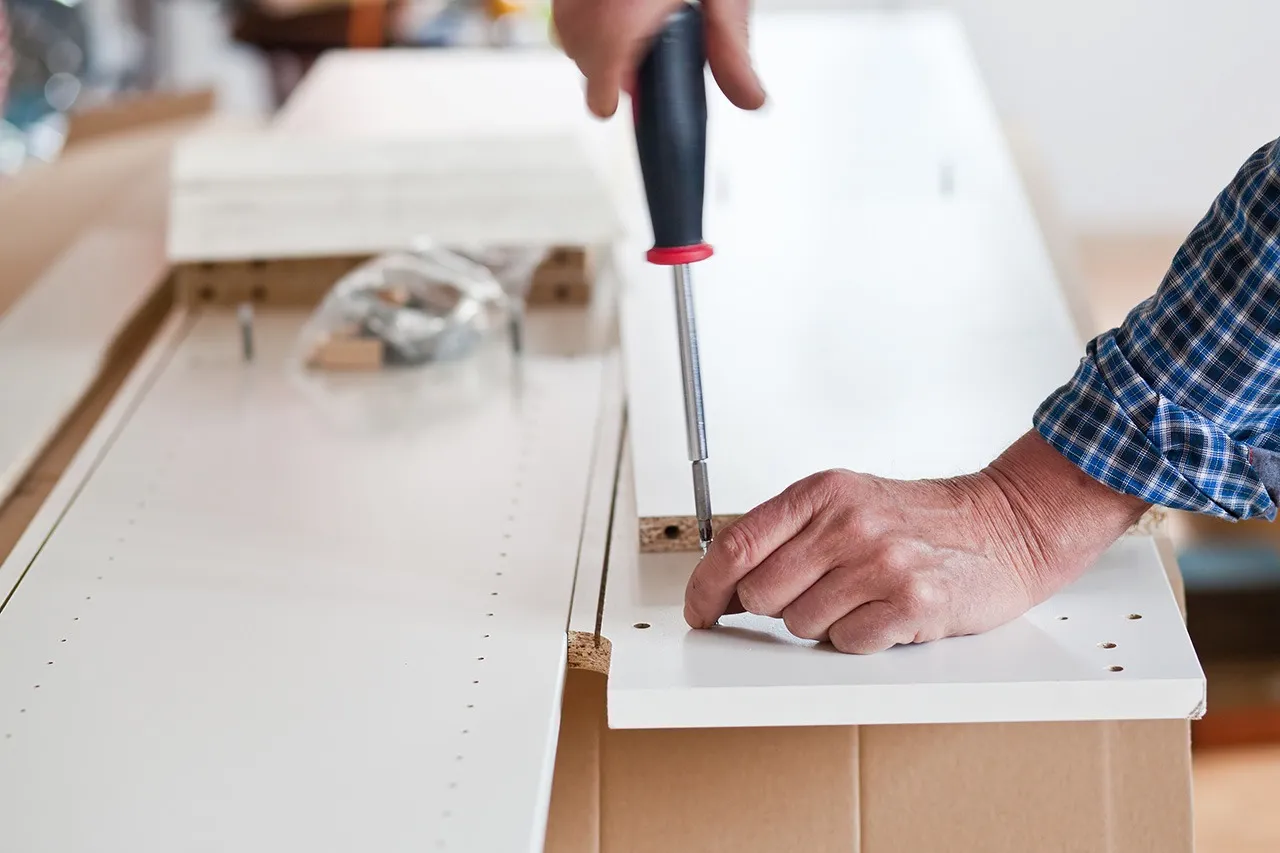
Careful disassembly means bagging and labelling the hardware for each piece, keeping the assembly instructions with it, and photographing the piece fully assembled before the first screw comes out. Move Your Stuff handles this work through its furniture assembly and disassembly service, so the labelled bags and the photos travel with the panels they belong to.
Pieces that stay assembled need their drawers, doors and shelves removed or secured before loading. The CCI's point about collisions between object parts applies directly, since an unsecured drawer sliding inside a dresser strikes its own runners and back panel each time the truck stops, so every loose part should come out and join the stack of panels and labelled hardware bags waiting to be packed.
Once a tall frame is reduced to flat panels, no long side is left to act as a lever on its joints.
Packing panels and hardware for the truck
The CCI publishes a five-step approach to packing fragile objects for shipment, and it begins with basic package design information such as object size. Household furniture benefits from the same starting point, so measure the panels and group them by size until each bundle is stable, with no panel overhanging the one beneath it where an edge could catch or bend.
The same thinking runs through CCI Technical Bulletin 34, which identifies shipping hazards and their effects on artwork, then provides control measures and design goals to help museum packers safely ship and store artwork in protective packaging. For furniture, those goals become plain tasks. Pad the corners and faces where impact concentrates, separate panels so they cannot rub against each other, and keep heavy items off thin panels that would bow under pressure.
Panels that slide against each other during the drive arrive scuffed on their faces and chipped along their edges. Wrapping each panel, standing or laying the bundles so they cannot shift, and taping each hardware bag to its own bundle keeps parts and fasteners together all the way to the new home, and households that want this handled can book packing services so the bundles are wrapped before loading starts.
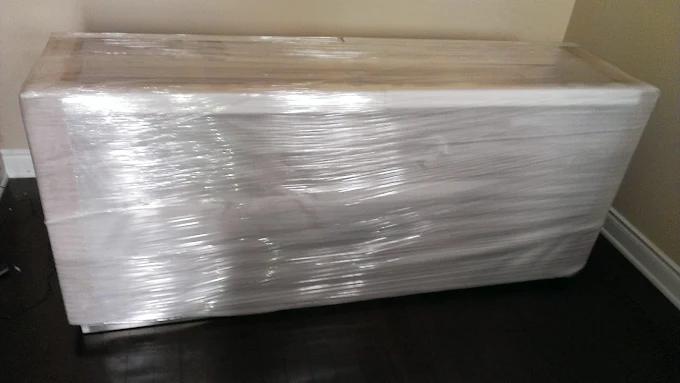
A full wrap spreads impact across the surface and keeps finished faces from abrading against other items in the truck.
Reassembly checks at the new home
After unloading in Markham, North York, Thornhill or Newmarket, check every panel for chips at the corners and around fastener holes before reassembly begins. Because small cracks increase an object's susceptibility to force, a damaged joint should not simply be tightened and returned to daily use, since a bed frame or loaded bookshelf keeps working on that weak point long after moving day.
Plenty of people rebuild their own flat-pack furniture, and with the photos and labelled hardware bags from disassembly the job stays manageable. Professional disassembly and reassembly is priced on the scope of the job. That scope comes down to the number of pieces, their size, the time needed to take each one down and rebuild it, and whether packing is included in the same booking.
Before moving day, walk each room and count the flat-pack pieces that are tall or wide, then photograph every one of them fully assembled. Call Move Your Stuff at 647-982-1819 or request a quote with that count in hand, so disassembly is booked before the truck is loaded and no wardrobe leaves the old home with its joints still carrying the whole frame.
The number of pieces to take down and rebuild
Their size, since a wardrobe or bed frame takes longer than a side table
The total time needed for disassembly and reassembly
Whether packing of panels and hardware is included
How York Region handled renovation debris, why furniture and drywall miss regular pickup, where hauled loads go in Ontario and why reuse comes before landfill.