When a North York Bin or Moving Container Needs a City Permit
How Toronto's Street Occupation Permit applies to bins and containers outside North York homes, what drives the permit fee, why moving day parking is excluded, and which city depots take debris instead.
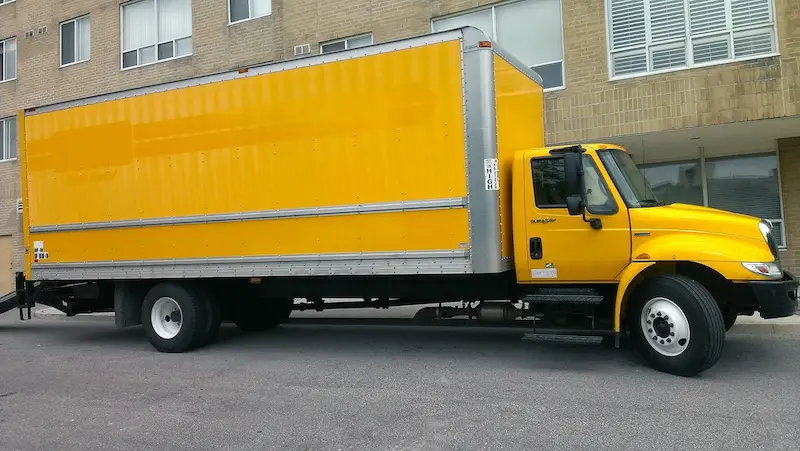
A disposal bin dropped in the roadway or rear laneway outside a North York house during a kitchen or basement renovation needs a City of Toronto Street Occupation Permit. The city requires that permit whenever equipment temporarily occupies the boulevard, sidewalk, roadway or public lane beyond your property line, as set out on its Street Occupation Permit page, and North York streets fall under that same Toronto rule.
The boundary that decides the question is the property line, so placement should be measured from there and not from the curb. The city names four surfaces beyond that line: the boulevard, the sidewalk, the roadway and the public lane. A bin resting on the boulevard in front of the house is on city space in the same way as one parked in the travel lane, and both need the permit.
Some residents assume a container used only for a household move sits outside the rule, and the city's published wording neither confirms nor rules that out. It names a moving container placed during a demolition, renovation or construction project, and says nothing specific about a container parked on the street just to load furniture. Anyone planning a move-only container on a North York street should confirm with the City of Toronto whether the permit applies before the container is delivered.
How the permit fee is calculated
The equipment fee for a disposal bin or moving container is charged per day, plus HST, so each extra day a bin stays in the roadway adds another day to the permit bill. The city publishes its current 2026 rates on the permit page, and the total a resident pays depends first on how many days the bin occupies city space.
A bin that closes a lane is billed differently from one tucked along the curb, because on top of the daily equipment fee the city adds a separate charge for each additional lane closure and a higher charge for a full lane closure. On a narrow North York laneway, where the bin sits decides which of those charges applies, which means placement can move the final cost as much as the number of days the bin stays.
The city's permit page states that Street Occupation Permits must be obtained in person and are paid for when they are issued, so the trip to pick up the permit has to fit into the schedule before the bin's first day beyond the property line.
Moving day parking is not covered
Residents who expect Toronto's Special Parking Consideration to cover a moving truck outside a North York home are counting on relief the city does not offer, because its parking regulations state the consideration is not available for moving days. The same exclusion covers visiting friends.
Parking consideration also never applies to parking on sidewalks or boulevards, No Standing or No Stopping violations, fire routes or permit parking streets, whatever the reason behind the request. A truck stopped on the boulevard beside a permitted bin is covered by neither system, since the Street Occupation Permit applies to the bin as equipment and the parking program excludes boulevard parking outright.
Every day a bin holds street space remains a paid permit day, which is why depot runs deserve a look for smaller loads that could leave the property without occupying the roadway at all.
Parking on sidewalks or boulevards, including the strip beside a bin
No Standing or No Stopping violations
Fire routes
Streets designated for permit parking, even for a short loading stop
A permit for the bin does nothing for the truck, since Toronto's Special Parking Consideration excludes moving days.
Using North York depots instead of street space
A renovation that leaves drywall offcuts and leftover solvents has two North York destinations on the city's drop-off depot list that take both, Bermondsey at 188 Bermondsey Road and Ingram at 50 Ingram Drive, since they accept clean drywall up to 1 tonne alongside household hazardous waste. At Bermondsey, hazardous waste and electronics are accepted Monday to Friday 10 a.m. to 6 p.m. and Saturday 7 a.m. to 12:30 p.m., with the depot closed Sunday, so a weekend project has a Saturday morning window and nothing after it.
A load that includes an old mattress points to the Dufferin depot at 35 Vanley Crescent, which lists mattresses among its accepted items but turns away household hazardous waste and electronics and opens Monday to Friday 6 a.m. to 6 p.m., so old paint cans and a mattress in the same load mean two stops. Victoria Park, at 3350 Victoria Park Avenue, handles renovation waste without drywall together with hazardous waste and e-waste, which suits a tear-out load that skipped the walls but still includes solvents.
A depot run only works for residents who can drive there. The City of Toronto's drop-off depot rules do not permit walk-ins or bicycles, and a safe motorized vehicle with a secured load is required at every Toronto depot. Tires are not accepted at any of them until further notice. A household without a suitable vehicle still needs a bin with its permit days, or a hauling option such as junk removal, offered locally as junk removal in North York, which keeps the debris off the street entirely.
Bermondsey, 188 Bermondsey Road: garbage, Blue Bin recycling, yard waste, clean drywall up to 1 tonne, metal, hazardous waste and e-waste
Ingram, 50 Ingram Drive: the same categories as Bermondsey
Dufferin, 35 Vanley Crescent: garbage, yard waste, Blue Bin items, renovation waste without drywall, metal and mattresses
Victoria Park, 3350 Victoria Park Avenue: garbage, yard waste, Blue Bin items, renovation waste without drywall, hazardous waste and e-waste
Lead times for the permit and the bin
Move Your Stuff offers bins for large clean-outs with same-day pick-up, so the bin itself is rarely the step that holds up a North York project, and the earliest date a bin can lawfully sit in the roadway is the date the permit is in hand.
Apartment and condo moves in North York add building paperwork to the timeline. For apartment moving, Move Your Stuff contacts building management two weeks before the move to confirm the elevator booking and submit a certificate of insurance, and it provides certificates on request, typically within 24 to 48 hours. The company recommends booking an apartment move at least two weeks in advance, and the building's requirements run in parallel with any city permit needed for street space outside the lobby.
Write down the exact dates the bin will sit beyond your property line, take them to the city in person and leave with the Street Occupation Permit paid and issued before delivery day, since a bin that arrives first is occupying the street without one. With those dates fixed, call Move Your Stuff at 647-982-1819, available 9am to 9pm, 7 days a week, or request a quote to schedule the bin or a residential move in North York.
When a North York bin or moving container needs a Toronto Street Occupation Permit, what drives the permit fee, the moving day parking exclusion, and city drop-off depots.